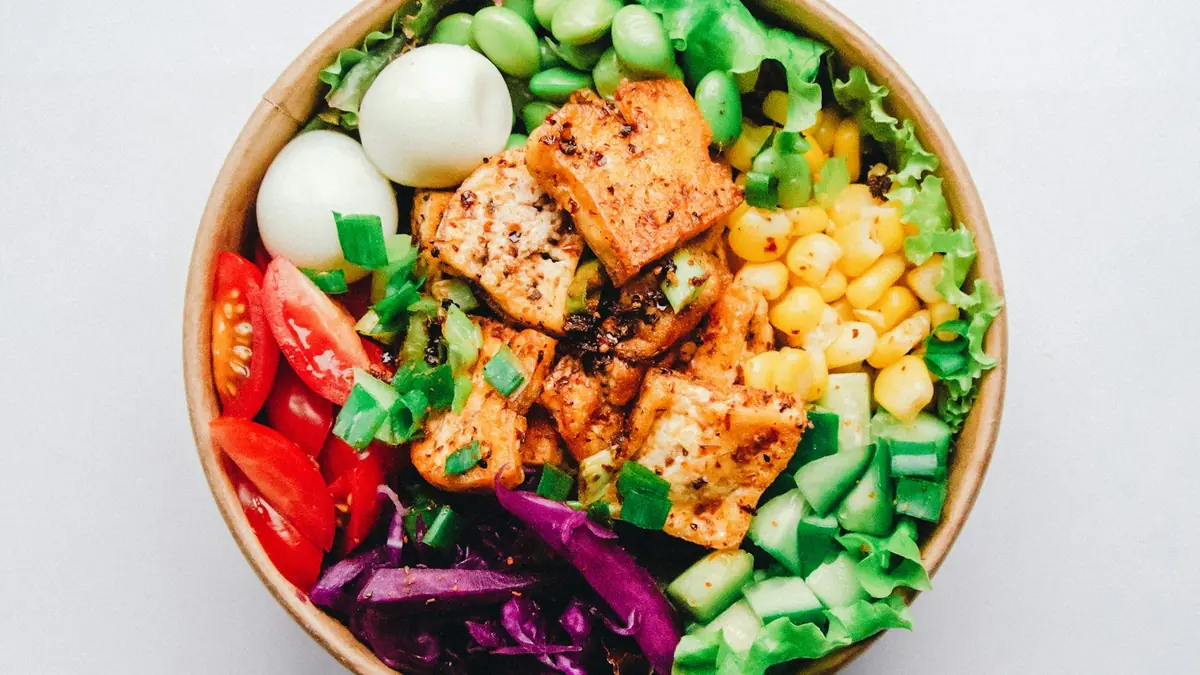
You spend Sunday afternoon cooking chicken, rice, and vegetables for the week. Everything goes into meal-prep containers, and by Monday morning, your refrigerator is full of ready-to-eat lunches.
But when Friday arrives, you open the last container and wonder:
Is this chicken and rice still safe to eat?
It looks fine. It doesn't smell bad. And you've kept it refrigerated all week.
Unfortunately, appearance and smell cannot reliably tell you whether leftovers are safe.
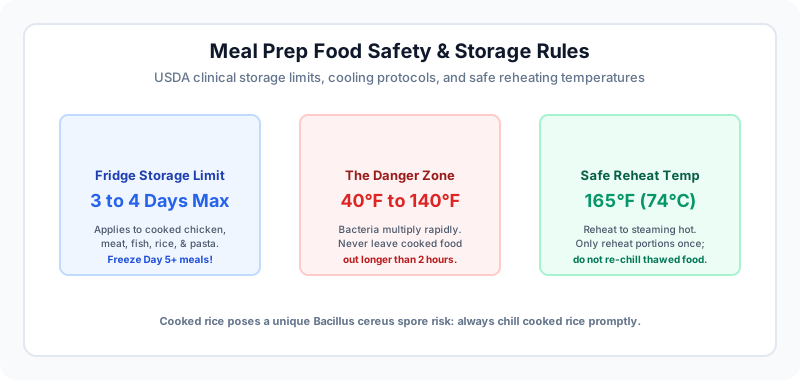
According to the U.S. Department of Agriculture (USDA), most cooked meal-prep foods can be stored in the refrigerator for 3–4 days, provided they were handled safely and kept at 40°F (4°C) or below.
That means preparing five or seven days of meals doesn't necessarily mean you should keep all of them in the refrigerator.
A safer solution is simple: refrigerate the meals you'll eat within the next few days and freeze the remaining portions promptly.
In this guide, you'll learn how long different meal-prep foods last, how to cool and store them correctly, and how to reheat meals without compromising food safety.
Quick Answer: How Long Can Meal Prep Stay in the Fridge?
Most cooked meal-prep foods last 3 to 4 days in the refrigerator when stored correctly.
Here's a quick reference:
Meal-Prep Food | Refrigerator Storage |
Cooked chicken or turkey | 3–4 days |
Cooked ground beef | 3–4 days |
Cooked fish | 3–4 days |
Cooked white or brown rice | 3–4 days |
Cooked pasta | 3–4 days |
Cooked vegetables | Generally 3–4 days as leftovers |
Soups and stews | 3–4 days |
Cooked egg dishes | 3–4 days |
Hard-boiled eggs | Up to 1 week |
Chicken, tuna, or egg salad | 3–4 days |
These times generally assume that food was properly cooked, cooled promptly, and stored continuously at or below 40°F (4°C).
They're not guarantees that improperly handled food will remain safe for the listed period.
If you won't eat a prepared meal within four days, freeze it promptly rather than leaving it in the refrigerator all week. For complete batch-cooking ideas engineered for multi-day storage, explore our Meal Prep Recipes Guide.
Can You Meal Prep for Five Days?
Yes, you can prepare five days of meals at once.
But that doesn't mean all five days of food should stay in the refrigerator.
Imagine you cook five chicken-and-rice lunches on Sunday evening.
A practical storage plan would be:
Meal | Storage Plan |
Monday lunch | Refrigerate |
Tuesday lunch | Refrigerate |
Wednesday lunch | Refrigerate |
Thursday lunch | Refrigerate only if still within 3–4 days of cooking |
Friday lunch | Freeze promptly after preparation |
The exact cutoff depends on when the food was cooked and refrigerated.
For example, food cooked Sunday afternoon should not automatically be considered safe throughout Thursday evening.
The Sunday Meal-Prep Rule
If you cook on Sunday and want lunches through Friday:
- Prepare your meals safely.
- Divide them into individual containers.
- Refrigerate the portions you'll eat within 3–4 days.
- Freeze the remaining portions promptly.
- Move a frozen portion to the refrigerator to thaw when needed.
- Reheat it thoroughly before eating.
This approach gives you the convenience of weekly meal prep without depending on five- or six-day-old refrigerated leftovers.
How Long Does Cooked Chicken Last in the Fridge?
Cooked chicken generally lasts 3–4 days in the refrigerator, according to USDA guidance.
This includes properly handled grilled, roasted, baked, or boiled chicken.
The storage recommendation applies whether you eat it on its own or include it in a prepared meal.
Example: Chicken Breast Meal Prep
Suppose you grill six chicken breasts on Sunday.
You want to use them for:
- Chicken and rice bowls
- Chicken sandwiches
- Chicken salads
- Chicken with roasted vegetables
You can refrigerate the portions you'll eat over the next few days.
Freeze the extra portions soon after cooking and cooling.
Does Adding Sauce Make Chicken Last Longer?
Not necessarily.
Adding barbecue sauce, tomato sauce, or another condiment does not automatically extend the safe refrigerator life of cooked chicken.
The finished dish still needs appropriate refrigeration and timely use.
Can You Eat Cooked Chicken After Five Days?
USDA guidance recommends using cooked chicken leftovers within 3–4 days.
If your cooked chicken has been refrigerated for five days, the safer choice is to discard it.
Don't depend on smell, taste, or appearance to decide.
Practical tip: Label chicken containers with the preparation date and freeze portions you won't eat within the recommended period. When measuring individual portions from batch cooking, review our Raw vs Cooked Food Calories Guide to account for moisture shifts.
How Long Does Cooked Rice Last in the Fridge?
Under USDA guidance, cooked rice can generally be refrigerated for 3–4 days when properly handled.
However, rice deserves special attention because of a bacterium called Bacillus cereus.
Why Can Cooked Rice Cause Food Poisoning?
Uncooked rice can contain Bacillus cereus spores.
Some spores may survive ordinary cooking.
If cooked rice sits for too long at unsafe temperatures, surviving spores can develop into bacteria that multiply and may produce toxins.
Certain toxins associated with this organism are heat-stable, meaning reheating does not reliably make improperly stored rice safe.
This is why refrigerating rice promptly matters.
How to Store Cooked Rice Safely
Follow these steps:
- Cook the rice thoroughly.
- Divide large batches into smaller, shallow containers.
- Refrigerate promptly rather than leaving a large pot on the counter.
- Keep the refrigerator at 40°F (4°C) or below.
- Use the rice within the recommended storage period or freeze it promptly.
If rice has been left at room temperature longer than two hours, discard it. When ambient temperatures are above 90°F (32°C), use the one-hour limit.
Can You Reheat Rice the Next Day?
Yes, if it was cooled and stored safely.
Reheat leftovers thoroughly to an internal temperature of 165°F (74°C).
But remember: reheating cannot reliably undo unsafe storage.
Important: Some countries issue more conservative rice-specific advice. This article uses U.S. USDA guidance; follow stricter applicable local advice where relevant.
How Long Does Cooked Pasta Last in the Fridge?
Plain cooked pasta generally lasts 3–4 days in the refrigerator under USDA storage guidance.
Pasta dishes containing meat, dairy, or sauces also need careful handling.
What About Pasta With Cream Sauce?
Creamy pasta dishes should be refrigerated promptly and generally used within 3–4 days as cooked leftovers.
Don't assume a cream-based sauce remains safe for longer simply because the pasta itself still looks good.
What About Pasta With Tomato Sauce?
Tomato-based sauces may have different acidity levels, but that doesn't mean a prepared pasta meal automatically has an extended refrigerator life.
For mixed cooked leftovers, the 3–4-day rule is a sensible general approach.
Best Way to Store Pasta
For convenient reheating:
- Divide pasta into meal-sized portions.
- Store it in covered containers.
- Refrigerate promptly.
- Label containers with the preparation date.
- Freeze portions that won't be eaten within the safe refrigeration period.
When reheating pasta, adding a little water may help restore its texture.
How Long Do Meal-Prep Vegetables Last?
Cooked vegetables generally follow the 3–4-day refrigerated leftover guideline.
Examples include:
- Roasted broccoli
- Cooked carrots
- Green beans
- Sautéed spinach
- Roasted cauliflower
- Mixed vegetable dishes
However, storage time isn't the only consideration.
Some vegetables lose their texture before their recommended refrigerator storage period ends.
For example, roasted zucchini may become soft, while carrots or green beans may maintain their texture better.
What About Raw Vegetables?
Raw vegetables don't all have the same shelf life.
Whole carrots, washed lettuce, cut cucumbers, and prepared salads have different storage characteristics.
For meal prep, treat cut or prepared perishable produce carefully, keep it refrigerated, and follow food-specific storage guidance.
Don't apply the cooked-leftover rule to every raw vegetable.
Should You Store Salad Separately From Hot Food?
Yes.
If you're preparing a chicken salad bowl, keeping leafy greens and dressing separate from hot cooked ingredients can help maintain texture and quality.
Allow cooked components to cool safely in the refrigerator rather than placing hot chicken directly onto delicate salad leaves intended to be eaten later.
How Long Do Eggs Last for Meal Prep?
Egg storage depends on how they're prepared.
Egg Preparation | Refrigerator Storage |
Hard-boiled eggs | Up to 1 week |
Cooked scrambled eggs | Generally 3–4 days |
Omelets and egg casseroles | 3–4 days |
Egg salad | 3–4 days |
Can You Meal Prep Hard-Boiled Eggs for the Week?
Yes.
USDA guidance allows properly refrigerated hard-boiled eggs to be stored for up to one week.
Keep them refrigerated and handle them hygienically.
For dishes such as scrambled eggs or egg muffins, use the shorter cooked-leftover recommendation.
How to Cool Meal-Prep Food Safely
One of the biggest meal-prep mistakes happens before food ever reaches the refrigerator.
You cook a large pot of rice, soup, or chicken, then leave it on the kitchen counter for several hours because it's still hot.
That can create unsafe conditions for bacterial growth.
The Two-Hour Rule
Perishable foods should be refrigerated within:
- 2 hours under ordinary conditions.
- 1 hour when the surrounding temperature is above 90°F (32°C).
This applies to cooked chicken, meat, rice, pasta, prepared vegetables, and many other perishable foods.
Should You Wait Until Food Is Completely Cold?
No.
You don't need to leave food sitting at room temperature until it becomes completely cold.
USDA guidance permits putting hot food directly into the refrigerator.
For large batches, dividing food into shallow containers encourages faster cooling.
A Safe Cooling Routine
Suppose you've made a large batch of chicken and rice.
Here's what to do:
- Finish cooking and turn off the heat.
- Separate the food into smaller portions using clean utensils.
- Transfer portions into shallow, food-safe containers.
- Refrigerate promptly, allowing air circulation.
- Once chilled, keep the containers covered and properly stored.
Avoid placing an enormous, tightly packed, steaming pot in an already crowded refrigerator. Smaller containers cool more efficiently.
Remember: The two-hour rule is a maximum time outside refrigeration, not a recommendation to leave food out for two hours.
What Temperature Should Your Fridge Be for Meal Prep?
Your refrigerator should stay at 40°F (4°C) or below.
Your freezer should stay at 0°F (-18°C) or below.
These temperatures help slow or prevent the growth of harmful microorganisms.
A refrigerator thermometer is useful because the number on your fridge's control dial doesn't always represent the actual internal temperature.
Where Should You Store Meal-Prep Containers?
Use the main refrigerator shelves rather than relying on the door for highly perishable prepared meals.
Door temperatures can fluctuate more because of repeated opening.
Also:
- Avoid overfilling the refrigerator.
- Keep raw meat separated from ready-to-eat food.
- Use clean, covered containers.
- Refrigerate meals promptly.
- Label containers with dates.
Proper storage starts with temperature control, not the type of container alone.
Are Glass or Plastic Containers Better for Meal Prep?
Both can work if they're appropriate for food storage.
The most important features are:
- Food-safe materials
- Secure lids
- Easy cleaning
- Appropriate size
- Refrigerator and freezer suitability
- Microwave suitability when reheating
Glass Containers
Advantages include durability, easy cleaning, and resistance to staining.
Some are oven-safe, but always check manufacturer instructions.
Plastic Containers
Plastic containers are often lightweight, inexpensive, and convenient to transport.
Use food-grade containers and follow their microwave and heat-use instructions.
Avoid heating food in containers that aren't designed for microwave use.
Do Airtight Containers Make Food Last Longer?
They help protect food from contamination, moisture loss, and absorbing other refrigerator odors.
But they do not override the USDA's recommended refrigerator storage times.
A cooked chicken meal doesn't automatically become safe for seven days because it's stored in an airtight container.
How to Reheat Meal Prep Safely
When you're ready to eat your refrigerated meal, reheating correctly is important.
USDA guidance recommends reheating leftovers to an internal temperature of 165°F (74°C).
A food thermometer provides a more reliable check than simply looking for steam.
Reheating in the Microwave
Follow these steps:
- Transfer the meal to a microwave-safe container if necessary.
- Cover it with a microwave-safe lid or cover, allowing steam to escape.
- Heat according to the portion size and microwave power.
- Stir or rotate the food partway through heating.
- Allow it to stand briefly so the temperature can distribute.
- Check that the food reaches 165°F (74°C) throughout.
Microwaves can heat food unevenly, creating hot and cold spots.
That's why stirring and checking temperature matter.
Reheating in the Oven
For casseroles, baked pasta, and prepared chicken dishes:
- Transfer food into an oven-safe dish.
- Use an oven temperature of at least 325°F (163°C) for reheating leftovers.
- Cover the dish if necessary to prevent excessive drying.
- Heat until the center reaches 165°F (74°C).
Cooking time will depend on the amount and type of food.
Reheating on the Stovetop
Soups, stews, and sauces can often be reheated in a saucepan.
Stir regularly to help the food heat evenly.
USDA recommends bringing leftover soups, sauces, and gravies to a boil when reheating.
For other leftovers, verify the appropriate internal temperature.
Can You Reheat Meal Prep in an Air Fryer?
An air fryer can reheat certain prepared foods, but don't rely on a particular setting or number of minutes alone.
Use a food thermometer to ensure leftovers reach 165°F (74°C) throughout.
Can You Reheat Meal Prep More Than Once?
The safest and most practical approach is to reheat only the portion you plan to eat.
Repeated heating and cooling creates additional opportunities for improper temperature handling.
If reheated leftovers are handled safely and refrigerated promptly, reheating does not automatically make food unsafe. However, it does not reset the original storage timeline.
Don't treat repeatedly reheated food as though it were freshly cooked.
Example
You have three portions of chicken and rice in a single container.
Instead of reheating the entire container each day:
- Remove one portion using clean utensils.
- Transfer it to a separate dish.
- Reheat that portion thoroughly.
- Keep the remaining food refrigerated.
This minimizes unnecessary temperature changes and handling.
When Should You Freeze Meal Prep?
Freeze portions if you won't use them within the recommended refrigerator storage period.
For a Sunday meal-prep routine, this generally means freezing meals intended for later in the week.
Which Meal-Prep Foods Freeze Well?
Many cooked foods freeze well, including:
- Cooked chicken
- Meatballs
- Chili
- Soups and stews
- Cooked rice
- Many pasta dishes
- Beans and lentils
- Cooked vegetables
Some foods may become watery or lose texture after freezing, such as lettuce, cucumbers, and certain creamy sauces.
How Long Can Frozen Meal Prep Last?
Food kept continuously frozen at 0°F (-18°C) remains safe indefinitely from a microbial perspective, according to USDA guidance.
However, quality may decrease over time.
As practical quality guidelines:
Meal Type | Suggested Freezer Quality Window |
Cooked meat | Approximately 2–3 months |
Cooked poultry | Around 4 months |
Soups and stews | Approximately 2–3 months |
Mixed casseroles | Approximately 2–3 months |
These are quality recommendations rather than deadlines after which continuously frozen food automatically becomes unsafe.
How to Freeze Prepared Meals
- Divide meals into individual portions.
- Cool them safely and promptly.
- Use freezer-safe containers or packaging.
- Label each portion with its preparation date.
- Freeze promptly.
- Keep the freezer at 0°F (-18°C) or below.
Don't wait until a refrigerated meal has already exceeded its recommended storage period before freezing it.
How to Thaw Frozen Meal Prep Safely
There are three common safe methods.
1. Thaw in the Refrigerator
Place your frozen meal in the refrigerator and allow it to thaw.
This is often the easiest method when planning ahead.
For example, you can move a frozen Friday lunch into the refrigerator on Thursday, allowing enough time to thaw.
The exact thawing time depends on portion size and food density.
2. Thaw in Cold Water
Place food in leak-proof packaging and submerge it in cold water, changing the water approximately every 30 minutes.
Food thawed by this method should be heated or cooked promptly as appropriate.
3. Thaw in the Microwave
Use the defrost function according to the manufacturer's instructions.
After microwave thawing, heat the leftovers promptly to the safe reheating temperature.
Don't leave frozen meals thawing on the kitchen counter overnight.
How Do You Know if Meal Prep Has Gone Bad?
Some spoilage signs are obvious.
These can include:
- Visible mold
- Unusual discoloration
- Slimy surfaces
- Unexpected changes in texture
- Strong, unpleasant odors
- Packaging that appears abnormally swollen
If you notice these signs, discard the food.
But here's the important point:
Food can contain harmful microorganisms even when it looks and smells normal.
Don't use taste testing to determine whether old leftovers are safe.
If the food was left at unsafe temperatures, its storage history is unknown, or it has exceeded the recommended refrigerator period, the safer choice is to discard it.
Seven Common Meal-Prep Food Safety Mistakes
Mistake 1: Keeping All Seven Days of Meals in the Refrigerator
Many cooked foods should be used within 3–4 days.
Better approach: Freeze later-week portions promptly.
Mistake 2: Leaving Cooked Rice Out Overnight
This can allow harmful bacteria to multiply.
Better approach: Divide rice into shallow containers and refrigerate promptly.
Mistake 3: Assuming Airtight Containers Make Food Safe for a Week
Airtight packaging does not stop all bacterial growth.
Better approach: Combine proper containers with temperature control and safe storage times.
Mistake 4: Reheating Until Food Feels Warm
A meal may have a hot exterior but a cooler center.
Better approach: Reheat thoroughly to 165°F (74°C).
Mistake 5: Letting a Large Pot Cool on the Counter
Large amounts of food can cool too slowly.
Better approach: Divide the food into smaller, shallow containers.
Mistake 6: Using Smell as the Only Safety Test
Harmful microorganisms may not create noticeable odors.
Better approach: Follow safe storage times and handling practices.
Mistake 7: Freezing Food After It Has Been Stored Too Long
Freezing does not reliably make food that has already become unsafe safe again.
Better approach: Freeze portions while they're still within the safe refrigeration period.
A Practical Five-Day Meal-Prep Storage Plan
Here's an easy example for someone who cooks on Sunday.
Sunday: Preparation Day
Cook a batch of:
- Chicken breast
- Brown rice
- Roasted vegetables
- Lentil soup
Divide everything into individual portions using clean utensils and shallow containers.
Store the next few days' meals in the refrigerator.
Freeze portions intended for later in the week promptly.
Monday and Tuesday
Eat refrigerated meals.
Remove only the portion you're going to use.
Reheat cooked leftovers to 165°F (74°C).
Wednesday
Continue using appropriately refrigerated meals.
Check their preparation dates rather than relying on whether they look fresh.
Thursday
Eat a refrigerated portion only if it remains within the safe 3–4-day window from cooking.
Alternatively, use a frozen meal that has been safely thawed.
Friday
Use a frozen portion that you've thawed safely.
This avoids relying on cooked food that has been sitting in the refrigerator since Sunday.
The key idea: You can meal prep once and eat throughout the workweek. Just don't assume the refrigerator is the right storage place for every portion.
Frequently Asked Questions
Is meal prep still good after five days?
Most cooked meal-prep foods are recommended for only 3–4 days in the refrigerator. If a prepared meal has been refrigerated for five days, the safer choice is to discard it rather than relying on appearance or smell.
Can cooked chicken last seven days in the fridge?
USDA guidance recommends using cooked chicken leftovers within 3–4 days. For a full week of chicken meal prep, freeze later portions promptly.
How long does chicken and rice last in the fridge?
Properly cooked, cooled, and refrigerated chicken and rice generally follow the 3–4-day cooked-leftover guideline under U.S. USDA recommendations. Rice requires especially careful cooling and temperature control.
Can you eat four-day-old meal prep?
Often, yes, if it's still within the recommended storage period, was properly cooked, refrigerated promptly, and continuously stored at or below 40°F (4°C). The precise timing and handling history matter.
Can you meal prep on Sunday for Friday?
Yes, but freeze the Friday portion promptly after preparing it rather than keeping it refrigerated for the entire week.
How long does cooked salmon last in the fridge?
Cooked fish leftovers generally last 3–4 days when handled and refrigerated properly. Discard them earlier if their safety is in doubt.
How long does cooked pasta last?
Cooked pasta typically lasts 3–4 days in the refrigerator. Freeze extra portions before that storage period ends.
Is it safe to put warm food in the refrigerator?
Yes. USDA guidance permits placing hot food directly in the refrigerator. Dividing large batches into shallow containers helps them cool more quickly.
Can I freeze cooked rice?
Yes. Cool and freeze it promptly using suitable packaging. Reheat it thoroughly after safe thawing, and don't rely on reheating to correct unsafe storage.
Can I reheat food twice?
Repeated reheating is not automatically unsafe if food is handled and stored correctly, but it increases opportunities for temperature abuse. Reheat only the portion you need and never treat reheating as restarting the original refrigerator storage period.
How do I make meal prep last a full week?
Refrigerate only the meals you'll eat within the next 3–4 days and freeze the remaining portions promptly. Thaw frozen meals safely when needed.
Can I eat meal prep cold?
Some properly cooked, promptly chilled, refrigerated foods can be eaten cold, such as cooked chicken in a salad. However, foods intended to be reheated should reach 165°F (74°C), and cold consumption does not make improperly stored food safe.
Final Thoughts: Meal Prep Is Easier When You Plan for Storage
Meal prepping can save time, simplify busy weekdays, and make preparing balanced meals more convenient—while serving as a core strategy in our Healthy Eating on a Budget Guide.
But cooking everything at once is only part of the process.
How you cool, store, freeze, and reheat your food matters just as much.
For most cooked meal-prep meals, remember four essentials:
- 3–4 days: General refrigerator storage limit for cooked leftovers.
- 40°F (4°C) or below: Recommended refrigerator temperature.
- 2 hours: Maximum time perishable food should normally remain unrefrigerated, reduced to one hour in temperatures above 90°F (32°C).
- 165°F (74°C): Recommended internal temperature for reheated leftovers.
If you're preparing meals for the entire workweek, the simplest strategy is to refrigerate the first few portions and freeze the rest.
That way, you can enjoy the convenience of meal prep without taking unnecessary food-safety risks.