A calorie deficit happens when your body uses more calories than you consume from food and drinks.
In simple terms, if your body needs about 2,200 calories per day to maintain your current weight and you consistently consume less than that amount, your body must make up the energy difference. Over time, this can lead to weight loss.
But creating a calorie deficit does not mean eating as little as possible.
A healthy approach focuses on a moderate, sustainable reduction in calories while still eating enough protein, fiber, vegetables, fruit, whole grains, healthy fats, vitamins, and minerals.
This beginner's guide explains how a calorie deficit works, how to create one, what to eat, common mistakes to avoid, and how to make weight loss more sustainable.
What Is a Calorie Deficit?
A calorie deficit means:
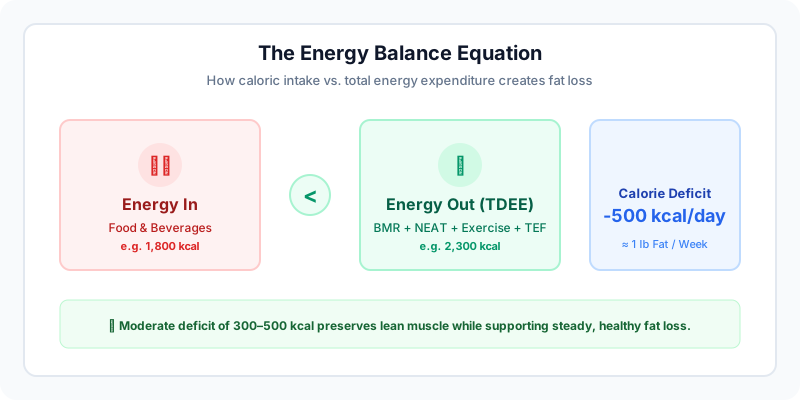
Calories consumed < Calories your body uses
Your body uses energy every day for:
- Breathing
- Circulating blood
- Maintaining body temperature
- Digestion
- Brain and organ function
- Walking
- Exercise
- Household activities
- Work and daily movement
Calories are simply a measure of energy.
When you consistently consume fewer calories than your body uses, your body begins using stored energy to cover part of the difference.
That is the basic principle behind weight loss.
CDC explains that combining lower calorie intake with physical activity can create the calorie deficit needed for weight loss.
Simple Calorie Deficit Example
When eating outside the home, applying practical restaurant calorie estimation heuristics allows you to enjoy social dining while staying in an energy deficit. Imagine that someone maintains their current weight at approximately 2,200 calories per day.
If they average:
2,200 calories consumed = roughly weight maintenance
If they instead average:
1,900 calories consumed = approximately 300-calorie daily deficit
The calculation is:
2,200 − 1,900 = 300 calories
That person would theoretically have a 300-calorie daily energy deficit.
Real bodies are more complicated than a calculator, however. Daily energy expenditure changes based on activity, body weight, metabolism, food intake, and other factors.
Treat calorie estimates as a useful starting point rather than a guarantee of exactly how quickly your weight will change.
How Does a Calorie Deficit Cause Weight Loss?
Your body requires energy continuously.
Food and beverages provide much of that energy. When energy intake falls below energy expenditure for a sustained period, stored energy is used to help meet the difference.
Over time, this can reduce body weight.
The important word is sustained.
Eating fewer calories for one day does not determine long-term results, just as eating more calories during one meal does not automatically cause meaningful fat gain.
Your overall pattern across days and weeks matters much more.
Do You Need a Calorie Deficit to Lose Weight?
For body weight to decrease over time, energy expenditure must exceed energy intake.
Different diets may create this deficit in different ways.
For example, someone may reduce calorie intake by:
- Eating smaller portions
- Reducing sugary drinks
- Eating fewer highly processed snacks
- Increasing vegetables
- Choosing more filling protein foods
- Eating more fiber
- Cooking more meals at home
- Following a structured meal plan
- Using time-restricted eating
The methods can differ, but weight loss still depends on an overall energy deficit.
This is why very different eating patterns can sometimes produce weight loss.
How Many Calories Do You Need Each Day?
There is no single calorie target that works for everyone.
Your energy needs can be affected by:
- Age
- Sex
- Height
- Weight
- Muscle mass
- Daily movement
- Exercise
- Metabolism
- Health conditions
- Medications
- Pregnancy or breastfeeding
NIDDK notes that calorie requirements can differ based on factors including age, height, weight, metabolism, sex, and activity level.
Two people of the same weight may therefore have different calorie needs.
What Are Maintenance Calories?
Maintenance calories are the approximate number of calories you need to consume to maintain your current body weight.
For example, if your body uses approximately 2,400 calories per day and your average intake is also around 2,400 calories, your weight may remain relatively stable over time.
Maintenance calories are sometimes referred to as total daily energy expenditure, or TDEE.
A TDEE estimate includes several parts of energy expenditure.
Basal Metabolic Rate
Your basal metabolic rate, or BMR, is the energy your body needs for basic functions at rest.
Physical Activity
Exercise such as walking, running, cycling, lifting weights, or playing sports increases energy expenditure.
Daily Movement
Standing, walking around your home, doing household tasks, and other everyday movements also use energy.
Digestion
Your body also uses some energy to digest and process food.
Together, these contribute to your total daily energy expenditure.
How Do You Calculate a Calorie Deficit?
A simple approach is:
Estimated maintenance calories − planned calorie intake = calorie deficit
For example:
Maintenance calories: 2,300
Daily intake: 2,000
Estimated deficit:
2,300 − 2,000 = 300 calories per day
If you use an online calorie or TDEE calculator, remember that the result is still an estimate.
Your real-world weight trend can help you determine whether your actual intake and expenditure are close to that estimate.
How Large Should a Calorie Deficit Be?
A larger deficit is not automatically better.
Aggressive calorie restriction may make a diet harder to follow and can increase problems such as:
- Hunger
- Low energy
- Poor training performance
- Difficulty concentrating
- Nutritional inadequacy
- Loss of lean body mass
- Difficulty maintaining the diet
A sustainable plan should provide enough food and nutrients while allowing gradual progress.
CDC states that people who lose weight gradually, around 1 to 2 pounds per week, are generally more likely to maintain the loss than people who lose weight more quickly.
However, that does not mean everyone should aim for exactly that rate.
Smaller people, people already closer to their goal weight, or those using a modest deficit may lose weight more slowly.
Does a 500-Calorie Deficit Guarantee One Pound of Weight Loss Per Week?
No.
You may have heard the rule that a 500-calorie daily deficit automatically produces one pound of weight loss per week.
It is better treated as a rough historical estimate rather than a guaranteed prediction.
Human weight loss is dynamic.
As body weight changes:
- Energy needs can change
- Activity may change
- Appetite may change
- Water weight fluctuates
- Metabolism adapts
- Food tracking is rarely perfectly accurate
NIDDK notes that metabolism slows during weight loss and that the body generally requires fewer calories at a lower body weight.
Your actual progress therefore may not follow a perfectly straight mathematical line.
How to Create a Calorie Deficit Without Starving Yourself
The goal is not to simply eat less food.
A better strategy is to make your diet more filling for the calories you consume.
1. Prioritize Protein
Include useful protein sources such as:
- Eggs
- Greek yogurt
- Chicken
- Fish
- Cottage cheese
- Beans
- Lentils
- Tofu
- Edamame
Protein can help build more satisfying meals while supporting muscle and other body tissues.
2. Eat More Vegetables
Vegetables can add volume, fiber, vitamins, minerals, and water to meals.
Examples include:
- Broccoli
- Spinach
- Carrots
- Bell peppers
- Mushrooms
- Cauliflower
- Tomatoes
- Cucumber
Instead of drastically shrinking your plate, you can sometimes replace part of a more calorie-dense food with vegetables.
3. Choose Whole Fruit
Whole fruits such as:
- Apples
- Oranges
- Berries
- Pears
- Peaches
provide water and fiber along with natural sweetness.
Whole fruit can often be more filling than fruit juice.
4. Include Fiber-Rich Foods
Useful sources include:

- Oats
- Beans
- Lentils
- Chickpeas
- Whole grains
- Vegetables
- Fruit
- Seeds
Fiber adds bulk and can make meals more satisfying.
5. Watch Liquid Calories
Drinks can contribute significant calories without providing the same fullness as solid meals.
Examples include:
- Sugary soft drinks
- Sweetened coffee
- Energy drinks
- Large amounts of fruit juice
- Milkshakes
- Alcohol
You do not necessarily have to eliminate every calorie-containing drink.
Simply becoming aware of them can make creating a calorie deficit easier.
6. Control Portions of Calorie-Dense Foods
Nutritious foods can still be calorie-dense.
Examples include:
- Nuts
- Nut butter
- Olive oil
- Avocado
- Cheese
- Seeds
These foods can fit into a healthy diet, but portions matter when calorie intake is a goal.
7. Cook More Meals at Home
Preparing meals yourself gives you greater control over:
- Oil
- Sauces
- Portion sizes
- Added sugar
- Ingredients
A restaurant meal can still fit into your diet, but frequent meals prepared with unknown amounts of oil, butter, or sauces can make calorie estimation difficult.
What Should You Eat in a Calorie Deficit?
A calorie deficit does not require special diet foods.
A balanced eating pattern can include:
Protein
- Eggs
- Fish
- Chicken
- Lean meats
- Yogurt
- Cottage cheese
- Beans
- Lentils
- Tofu
- Soy foods
Vegetables
- Leafy greens
- Broccoli
- Cauliflower
- Carrots
- Mushrooms
- Peppers
- Tomatoes
Fruit
- Berries
- Apples
- Oranges
- Bananas
- Pears
- Peaches
Carbohydrates
- Oats
- Potatoes
- Rice
- Whole-grain bread
- Quinoa
- Beans
- Other whole grains
Healthy Fats
- Nuts
- Seeds
- Avocado
- Olive oil
- Fatty fish
Current CDC guidance emphasizes a healthy eating pattern containing vegetables, fruit, protein foods, dairy without added sugars, healthy fats, and whole grains rather than eliminating entire food groups.
Simple Calorie Deficit Meal Example
You do not need unusual recipes.

Breakfast
Eggs + whole-grain toast + berries
Lunch
Chicken + rice + mixed vegetables
Snack
Greek yogurt + fruit
Dinner
Fish + potatoes + broccoli
This meal pattern provides protein, carbohydrates, fiber, vegetables, fruit, and fats while allowing portions to be adjusted to fit individual calorie needs.
Can You Eat Carbs in a Calorie Deficit?
Yes.
You do not need to eliminate carbohydrates to lose weight.
Foods such as:
- Potatoes
- Rice
- Oats
- Fruit
- Beans
- Whole-grain bread
- Quinoa
can all fit into a calorie deficit.
CDC currently recommends variety rather than eliminating an entire food type such as carbohydrates.
The amount you eat and the overall calorie content of your diet matter more than simply labeling carbohydrates as good or bad.
Can You Eat Fat in a Calorie Deficit?
Yes.
Dietary fat is an important part of a balanced diet.
Foods such as:
- Nuts
- Seeds
- Olive oil
- Avocado
- Fish
can fit into a weight-loss diet.
Fat provides more calories per gram than protein or carbohydrate, so portions of high-fat foods can have a meaningful effect on total calorie intake.
You do not need to remove fat. You simply need to account for it.
Can You Eat Your Favorite Foods and Still Lose Weight?
Yes, provided your overall eating pattern continues to support your calorie and nutritional needs.
You do not have to completely eliminate:
- Pizza
- Chocolate
- Desserts
- Burgers
- Pasta
- Bread
A sustainable eating pattern can include foods you enjoy.
The key is frequency, portion size, and what the rest of your diet looks like.
A plan that requires you to permanently avoid every favorite food may be difficult to maintain.
Do You Have to Count Calories?
No.
Calorie counting is one tool, not a requirement.
Some people find tracking helpful because it shows them:
- Portion sizes
- Hidden calories
- Liquid calories
- Eating patterns
- Frequently consumed foods
Others may prefer to create a calorie deficit by changing meal structure.
For example:
- Fill more of the plate with vegetables
- Include protein at each meal
- Reduce sugary drinks
- Reduce frequent snacking
- Use smaller portions of calorie-dense foods
- Prepare more meals at home
CDC notes that counting calories all the time is not necessary, although understanding your approximate calorie needs can be useful.
Can Exercise Create a Calorie Deficit?
Physical activity increases energy expenditure and can contribute to a calorie deficit.

Examples include:
- Walking
- Running
- Cycling
- Swimming
- Strength training
- Sports
- Hiking
However, exercise does not have to compensate for everything you eat.
CDC notes that most weight loss comes from reducing calorie intake, while regular physical activity is particularly important for health and maintaining lost weight.
For general health, CDC recommends that adults get at least 150 minutes of moderate-intensity aerobic activity per week, or an equivalent amount of vigorous activity, along with muscle-strengthening activity on at least two days per week.
Why Strength Training Can Be Useful During Weight Loss
When losing weight, the goal usually is not simply to make the number on the scale smaller.
Preserving muscle is also important.
Resistance training can include:
- Weight lifting
- Machines
- Resistance bands
- Body-weight exercises
Combining resistance training with adequate nutrition and protein can support muscle maintenance while losing weight.
Why Your Weight Changes Even When You Are in a Deficit
Scale weight can fluctuate from day to day.
Possible causes include:
- Water retention
- Sodium intake
- Carbohydrate intake
- Food still being digested
- Menstrual-cycle changes
- Bowel movements
- Hydration
- Exercise
This means a temporary increase on the scale does not automatically mean you gained body fat.
Look at your trend over several weeks rather than reacting to every individual weigh-in.
What If Your Weight Stops Decreasing?
A weight-loss plateau does not necessarily mean something is wrong.
As you lose weight, your calorie needs may decrease.
Other possibilities include:
- Portions gradually becoming larger
- Reduced activity
- Inaccurate calorie tracking
- Frequent untracked snacks
- High-calorie drinks
- Water-weight changes
- Changes in exercise
Review your overall pattern before immediately making a large calorie reduction.
NIDDK notes that lower body weight generally means the body requires fewer calories, which is one reason weight management changes over time.
Common Calorie Deficit Mistakes
1. Creating an Extreme Deficit
Eating drastically too little can make a plan difficult to maintain and may compromise nutrition.
The goal is sustainable weight loss, not the lowest possible calorie intake.
2. Ignoring Protein
Cutting calories while eating very little protein can make it harder to build a balanced diet.
Include protein-rich foods throughout the day.
3. Ignoring Fiber
Protein alone does not make a complete diet.
Include:
- Vegetables
- Fruit
- Beans
- Lentils
- Whole grains
4. Drinking Calories Without Tracking Them
Coffee drinks, soft drinks, juice, and alcohol can add meaningful calories.
5. Treating Exercise Calories as Exact
Fitness watches and exercise machines provide estimates.
Do not assume that every displayed calorie represents an exact amount of energy expenditure.
6. Expecting Linear Weight Loss
Your body weight will not necessarily drop every day.
Short-term fluctuations are normal.
7. Eliminating Entire Food Groups
Cutting out carbohydrates or dietary fat is not inherently required to create a calorie deficit.
8. Trying to Be Perfect
One higher-calorie meal does not destroy your progress.
Return to your normal eating pattern instead of responding with extreme restriction.
What Makes a Calorie Deficit Sustainable?
The most useful calorie deficit is one you can realistically maintain.
A sustainable approach usually includes:
- Foods you enjoy
- Adequate protein
- Fruits and vegetables
- Fiber-rich foods
- Reasonable portions
- Flexible meals
- Regular movement
- Adequate sleep
- Realistic expectations
CDC emphasizes that healthy weight management also involves physical activity, adequate sleep, and stress management, not food intake alone.
Is Faster Weight Loss Better?
Not necessarily.
Rapid weight loss can be attractive, but faster does not automatically mean healthier or more sustainable.
CDC reports that gradual and steady weight loss of roughly 1 to 2 pounds per week is more likely to be maintained than faster weight loss.
The appropriate rate still depends on the individual.
Someone starting at a higher body weight may experience a different rate of change than someone who has little weight to lose.
Does Losing a Small Amount of Weight Matter?
Yes.
You do not necessarily have to reach a dramatic transformation before experiencing health benefits.
CDC notes that even modest weight loss can improve measures such as blood pressure, cholesterol, and blood sugar in people who are above a healthy weight.
NIDDK also describes losing roughly 5% to 10% of starting body weight over six months as a realistic initial goal used in successful weight-management programs.
Individual health goals should still be discussed with a qualified healthcare professional when appropriate.
Who Should Be Careful With Calorie Restriction?
A self-directed weight-loss calorie deficit is not appropriate for everyone.
Professional guidance is particularly important for people who:
- Are pregnant or breastfeeding
- Are children or adolescents
- Are underweight
- Have a history of an eating disorder or disordered eating
- Have diabetes or another condition affected by food intake
- Have kidney, liver, or other significant medical conditions
- Take medications that affect appetite, blood sugar, or body weight
- Have unexplained weight changes
If you have a medical condition or are unsure whether weight loss is appropriate for you, speak with your doctor or a registered dietitian before significantly restricting calories.
Frequently Asked Questions
The Bottom Line
A calorie deficit means consuming less energy than your body uses.
It is the underlying energy condition needed for weight loss, but creating a deficit does not mean starving yourself or eliminating carbohydrates, fat, or your favorite foods.
A healthier approach is to:
- Use a moderate calorie deficit
- Eat enough protein
- Include vegetables and whole fruit
- Choose fiber-rich carbohydrates
- Use healthy fats in appropriate portions
- Stay physically active
- Monitor long-term trends instead of daily fluctuations
- Choose habits you can maintain
The goal is not to eat the fewest calories possible.
The goal is to create a nutritious, realistic, and sustainable eating pattern that supports gradual weight loss and long-term health.