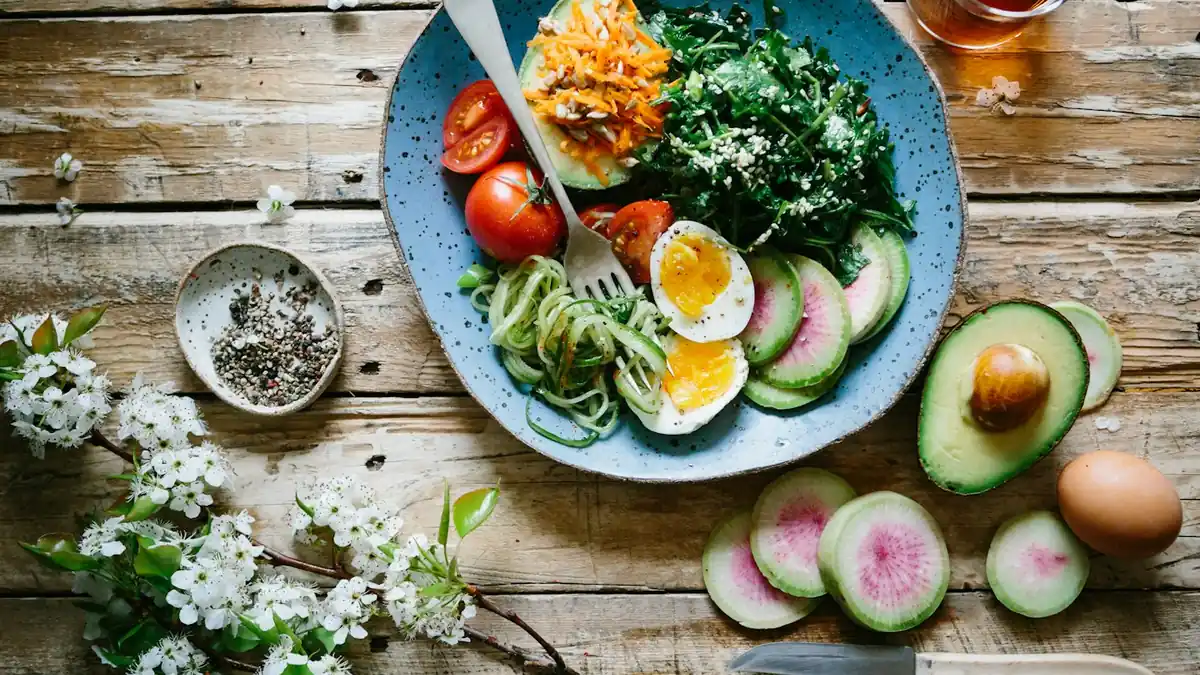
A balanced diet is not about eating perfectly, avoiding carbohydrates, or buying expensive “health foods.”
It means regularly eating a variety of nutritious foods in portions that provide the energy and nutrients your body needs.
A healthy balanced diet generally includes:
- Vegetables
- Whole fruits
- Protein-rich foods
- Whole grains and other nutritious carbohydrates
- Healthy fats
- Dairy or suitable alternatives
- Enough fluids
The current Dietary Guidelines for Americans, 2025–2030, emphasize whole, nutrient-dense foods including protein foods, vegetables, fruits, whole grains, dairy, and healthy fats while recommending less reliance on highly processed foods high in refined carbohydrates, added sugars, excess sodium, and less healthy fats.
You do not need to eat every food group in perfect proportions at every meal. What matters most is the overall pattern you follow across the day and week.
This guide explains what a balanced diet looks like, the major food groups, practical portion guidance, healthy meal ideas, and how to build an eating plan you can realistically maintain.
What Is a Balanced Diet?
A balanced diet is an eating pattern that provides adequate energy and essential nutrients while including a variety of foods from different food groups.
Your body needs:
- Protein
- Carbohydrates
- Dietary fats
- Fiber
- Vitamins
- Minerals
- Water
No single food can provide everything your body needs.
That is why variety matters.
A balanced diet also does not have one universal menu. Someone who exercises intensely may need substantially more food than someone with a sedentary lifestyle. Age, body size, health, culture, food preferences, and personal goals also influence what an appropriate diet looks like.
Quick Answer: What Should a Balanced Meal Look Like?
When grocery shopping for packaged foods, decoding packaged ingredients on nutrition labels helps you identify hidden sugars and sodium benchmarks. An easy way to build a balanced meal is:
½ plate: vegetables and fruit
¼ plate: healthy protein
¼ plate: whole grains or another nutritious carbohydrate
Then add a modest amount of healthy fat and choose water or another suitable unsweetened drink.
Harvard's Healthy Eating Plate uses approximately this structure, with half the meal made from vegetables and fruit, one-quarter from whole grains, and one-quarter from healthy protein. The proportions are practical guidelines rather than fixed calorie prescriptions.
For example:
Chicken + brown rice + broccoli + salad
or:
Lentils + quinoa + roasted vegetables
or:
Salmon + potatoes + spinach + tomatoes
The foods can change. The basic structure remains useful.
The Main Food Groups in a Balanced Diet
1. Vegetables
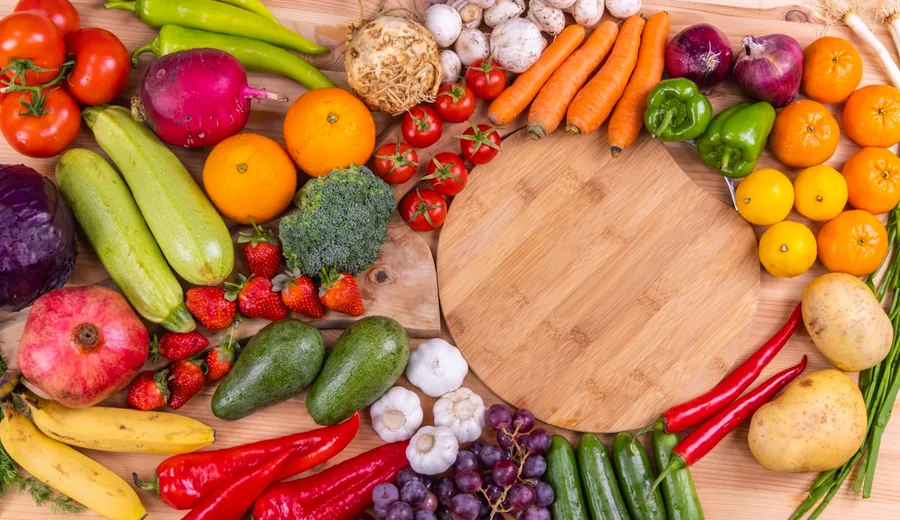
Vegetables should make up a substantial part of a healthy eating pattern.
Examples include:
- Spinach
- Broccoli
- Carrots
- Tomatoes
- Bell peppers
- Cucumbers
- Mushrooms
- Cauliflower
- Cabbage
- Green beans
- Eggplant
- Zucchini
- Leafy greens
Vegetables provide fiber, vitamins, minerals, water, and many naturally occurring plant compounds.
Try to eat different colors throughout the week instead of relying on the same vegetable every day.
Fresh, frozen, or canned?
All three can be useful.
Frozen vegetables are particularly convenient because they:
- Last longer
- Require little preparation
- Can reduce food waste
- Are easy to add to soups, rice dishes, pasta, and stir-fries
Canned vegetables can also fit into a balanced diet. If sodium is a concern, compare labels and rinse them when appropriate.
2. Fruit
Whole fruit is an important source of:
- Fiber
- Vitamins
- Minerals
- Water
- Natural carbohydrates
Good everyday options include:
- Apples
- Berries
- Oranges
- Bananas
- Pears
- Peaches
- Melons
- Grapes
- Mangoes
- Kiwi
Fruit does not need to be avoided simply because it contains natural sugar.
Whole fruit comes packaged with water, fiber, and nutrients.
Easy ways to eat more fruit
Try:
- Berries with Greek yogurt
- Banana with oatmeal
- Apple as a snack
- Orange after lunch
- Fresh fruit with breakfast
Whole fruit is generally a more useful everyday choice than relying heavily on fruit juice.
3. Protein Foods
Protein provides amino acids your body uses to build and maintain tissues.
Protein-rich foods include:
Animal sources
- Fish
- Chicken
- Turkey
- Eggs
- Yogurt
- Cottage cheese
- Lean meats
Plant sources
- Lentils
- Beans
- Chickpeas
- Tofu
- Tempeh
- Edamame
- Nuts
- Seeds
A balanced diet does not require meat at every meal.
For example:
Lentils + rice + vegetables
can provide a nutritious plant-based meal.
Likewise:
Tofu + vegetables + brown rice
can be an easy alternative to chicken or fish.
The key is variety rather than depending on one protein source every day.
4. Whole Grains and Nutritious Carbohydrates
Carbohydrates are one of your body's major energy sources.
Healthy eating does not require eliminating carbohydrates.
Useful carbohydrate foods include:
- Oats
- Brown rice
- Whole-grain bread
- Whole-grain pasta
- Quinoa
- Barley
- Potatoes
- Beans
- Lentils
- Fruit
Harvard's Healthy Eating Plate emphasizes whole and intact grains such as oats, brown rice, whole wheat, barley, and quinoa over heavily refined grain products.
Whole grains vs refined grains
Whole grains retain more of the original grain structure.
Examples:
- Oats
- Brown rice
- Whole wheat
- Barley
- Quinoa
Refined grains have been processed more extensively.
Examples include many:
- White breads
- Refined cereals
- White-flour baked products
You do not have to completely eliminate refined grains.
Simply make whole or less-refined carbohydrate sources a regular part of your diet.
5. Healthy Fats
Dietary fat is essential.
Your body needs fat for functions involving:
- Cell membranes
- Hormones
- Energy
- Absorption of fat-soluble vitamins
Useful sources of unsaturated fats include:
- Olive oil
- Nuts
- Seeds
- Avocado
- Fish
- Nut butters
A balanced diet should not automatically be a low-fat diet.
Harvard's Healthy Eating Plate recommends healthy plant oils in moderation and emphasizes fat quality rather than simply eliminating fat.
However, healthy fats are energy-dense.
You generally do not need enormous amounts of:
- Oil
- Nuts
- Seeds
- Nut butter
- Avocado
to obtain their nutritional benefits.
6. Dairy and Dairy Alternatives
Dairy foods can contribute nutrients such as:
- Protein
- Calcium
- Vitamin B12
- Other vitamins and minerals
Examples include:
- Milk
- Plain yogurt
- Greek yogurt
- Cheese
If you do not consume dairy, fortified alternatives can help.
Compare plant-based products for:
- Protein
- Calcium
- Vitamin D
- Added sugar
Plant drinks differ substantially in nutritional content, so two products that look similar may not provide the same nutrients.
7. Water and Hydration
Water is essential to a healthy eating plan.
It helps support:
- Normal body temperature
- Digestion
- Circulation
- Waste removal
- Fluid balance
Water is a simple everyday beverage choice.
Other drinks can include:
- Unsweetened tea
- Coffee in appropriate amounts
- Milk
- Suitable fortified alternatives
Try not to make sugary drinks your primary source of hydration.
Harvard's Healthy Eating Plate recommends water, tea, or coffee while discouraging frequent sugary beverages.
How to Build a Balanced Plate
You do not need a food scale to build every meal.
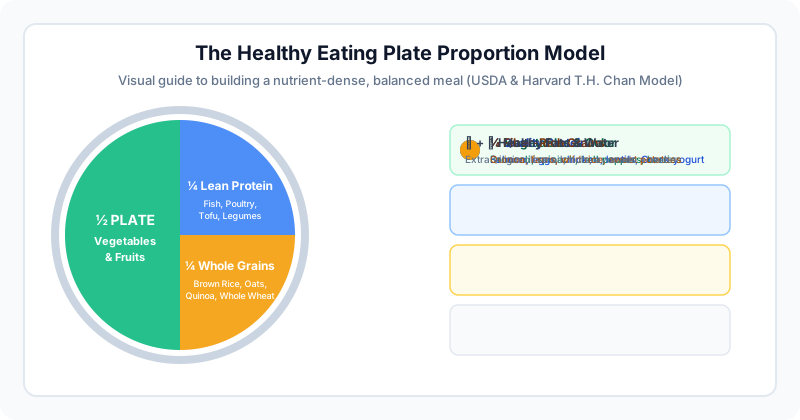
Use this simple framework.
Step 1: Fill About Half With Vegetables and Fruit
For lunch or dinner, vegetables can make up most of this section.
Examples:
- Broccoli
- Spinach
- Tomato
- Carrots
- Bell peppers
- Mixed salad
Fruit can be eaten alongside the meal or later.
Step 2: Add a Protein Source
Choose approximately one-quarter of the meal from foods such as:
- Chicken
- Fish
- Eggs
- Tofu
- Beans
- Lentils
Step 3: Add a Quality Carbohydrate
Use approximately one-quarter for:
- Brown rice
- Potatoes
- Quinoa
- Whole-grain pasta
- Whole-grain bread
- Other whole grains
Step 4: Add Healthy Fat if Needed
Examples:
- Olive oil dressing
- Avocado
- Nuts
- Seeds
Step 5: Choose a Drink
Water is an easy default.
This approach closely reflects evidence-based healthy plate guidance while allowing portions to change according to individual energy needs.
Do Portions Have to Be Exact?
No.
The plate method shows relative proportions, not exact calorie amounts.
Harvard specifically notes that its plate sections are not based on a fixed calorie target because calorie and nutrient requirements differ according to factors such as age, body size, sex, and activity.
For example, an endurance athlete may need considerably more:
- Rice
- Potatoes
- Oats
- Bread
- Fruit
- Overall food
than someone who spends most of the day sitting.
The composition of both meals can still be balanced.
What Does a Balanced Breakfast Look Like?
A simple breakfast formula is:
Protein + fiber-rich carbohydrate + fruit or vegetables + optional healthy fat
Example 1: Eggs and Toast
- Eggs
- Whole-grain toast
- Tomatoes
- Berries
Example 2: Greek Yogurt Bowl
- Plain Greek yogurt
- Oats
- Berries
- Chia seeds
Example 3: Oatmeal
- Oats
- Milk
- Banana
- Nuts
- Cinnamon
Example 4: Tofu Scramble
- Tofu
- Spinach
- Mushrooms
- Whole-grain toast
Example 5: Cottage Cheese Bowl
- Cottage cheese
- Fruit
- Oats
- Seeds
Breakfast does not need to be enormous.
The aim is simply to create a meal containing more than refined carbohydrates alone.
What Does a Balanced Lunch Look Like?
Chicken Grain Bowl
Combine:
- Grilled chicken
- Brown rice
- Broccoli
- Cucumber
- Tomato
- Olive oil and lemon dressing
Lentil Bowl
Combine:
- Lentils
- Quinoa
- Spinach
- Tomatoes
- Bell peppers
Tuna and Bean Salad
Combine:
- Tuna
- White beans
- Leafy greens
- Cucumber
- Tomatoes
Tofu Stir-Fry
Combine:
- Tofu
- Mixed vegetables
- Brown rice
The ingredients differ, but each meal includes protein, plants, and a useful carbohydrate source.
What Does a Balanced Dinner Look Like?
Dinner can follow exactly the same principle.
Fish Dinner
Salmon + potatoes + broccoli + salad
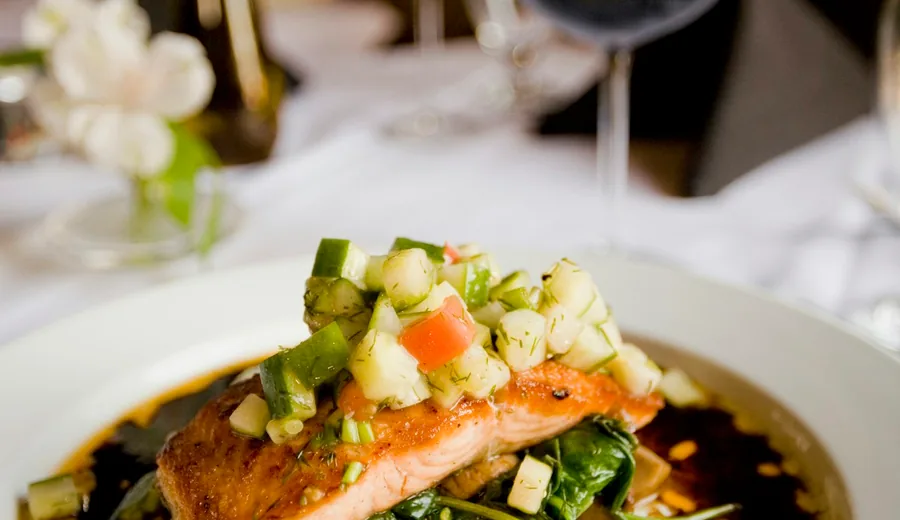
Chicken Dinner
Chicken + brown rice + roasted vegetables
Vegetarian Dinner
Lentil curry + vegetables + rice
Plant-Based Dinner
Tofu + quinoa + mixed vegetables
Pasta Dinner
Whole-grain pasta + vegetables + beans or chicken
There is no nutritional requirement that dinner must be your largest meal.
Healthy Balanced Snacks
Snacks are optional.
If you are not hungry between meals, you do not need to eat simply because it is “snack time.”
When you do want a snack, try combining useful food groups.
Examples:
- Greek yogurt + berries
- Apple + peanut butter
- Vegetables + hummus
- Cottage cheese + fruit
- Boiled egg + tomatoes
- Edamame
- Fruit + nuts
- Whole-grain crackers + hummus
A Simple Healthy Eating Plan for One Day
Here is an example of how balanced eating can look in practice.
Your portions should be adjusted according to your individual needs.
Breakfast
Greek yogurt oatmeal bowl
- Greek yogurt
- Oats
- Berries
- Chia seeds
Lunch
Chicken rice bowl
- Grilled chicken
- Brown rice
- Broccoli
- Cucumber
- Tomato
Snack
Apple + peanut butter
Dinner
Salmon plate
- Salmon
- Potatoes
- Mixed vegetables
- Green salad
Drinks
Water throughout the day according to your hydration needs.
This simple day provides:
- Protein
- Fiber
- Whole-food carbohydrates
- Fruit
- Vegetables
- Healthy fats
without requiring specialty foods.
Simple 3-Day Balanced Eating Plan
Day 1
Breakfast: Eggs, whole-grain toast, fruit
Lunch: Chicken, brown rice, vegetables
Snack: Greek yogurt and berries
Dinner: Salmon, potatoes, broccoli
Day 2
Breakfast: Oatmeal, milk, berries, nuts
Lunch: Lentil soup with whole-grain bread
Snack: Apple and peanut butter
Dinner: Chicken or tofu, quinoa, vegetables
Day 3
Breakfast: Greek yogurt, oats, banana
Lunch: Chickpea grain bowl
Snack: Edamame or cottage cheese
Dinner: Fish or tofu, rice, mixed vegetables
You can repeat meals you enjoy.
Balanced eating does not require a completely different recipe every day.
How to Build a Balanced Diet on a Budget
Healthy eating does not have to be expensive.
Affordable foods can include:
- Eggs
- Lentils
- Beans
- Chickpeas
- Oats
- Rice
- Potatoes
- Frozen vegetables
- Seasonal fruit
- Plain yogurt
- Peanut butter
- Canned fish
Buy seasonal produce
Fruit and vegetables in season may cost less.
Use frozen foods
Frozen vegetables and fruit can reduce waste and last much longer.
Eat legumes regularly
Beans and lentils provide both protein and fiber at relatively low cost.
Cook in batches
Prepare larger amounts of:
- Rice
- Lentils
- Beans
- Chicken
- Soup
and reuse them in different meals.
Skip unnecessary “health foods”
You do not need:
- Detox drinks
- Fat-burning foods
- Expensive superfood powders
- Special diet cookies
Ordinary nutritious foods can build an excellent eating pattern.
Can a Balanced Diet Include Carbohydrates?
Yes.
A balanced diet can include carbohydrates every day.
Useful sources include:
- Oats
- Rice
- Potatoes
- Whole grains
- Beans
- Lentils
- Fruit
- Vegetables
Rather than trying to eat no carbohydrates, focus on carbohydrate quality and portions.
Harvard's nutrition guidance similarly emphasizes choosing better carbohydrate sources rather than eliminating carbohydrates entirely.
Can a Balanced Diet Include Fat?
Yes.
Dietary fat is an important nutrient.
Choose foods rich in unsaturated fats more often, such as:
- Olive oil
- Nuts
- Seeds
- Avocado
- Fish
Fat does not need to be avoided.
Portions simply need to fit your overall energy needs.
Can You Eat Sugar on a Balanced Diet?
You do not need to eliminate every gram of sugar.
There is an important difference between naturally occurring sugars in foods such as:
- Fruit
- Milk
- Plain yogurt
and large amounts of added sugar found in:
- Sugary soft drinks
- Candy
- Cakes
- Sweetened cereals
- Desserts
- Sweetened coffee drinks
The current U.S. Dietary Guidelines emphasize reducing highly processed foods containing substantial added sugars rather than avoiding nutritious whole foods that naturally contain carbohydrates.
An occasional dessert can fit into a balanced eating pattern.
Can You Eat Fast Food?
Occasionally, yes.
One restaurant or fast-food meal does not determine whether your entire diet is healthy.
When practical, you can improve the balance of a restaurant meal by choosing:
- A protein source
- Vegetables
- Appropriate carbohydrate portions
- Water or another unsweetened beverage
You do not have to make every meal nutritionally perfect.
Your usual eating pattern matters much more.
Does a Balanced Diet Help With Weight Loss?
It can provide the nutritional foundation of a weight-loss diet.
However, nutritious foods do not automatically cause weight loss.
Foods such as:
- Nuts
- Nut butter
- Avocado
- Olive oil
- Cheese
can be nutritious while also being calorie-dense.
If weight loss is your goal, use the same balanced meal structure while adjusting portions so your average energy intake supports an appropriate calorie deficit.
Balanced Diet for Muscle Building
A muscle-building diet needs more than protein.
A balanced approach should provide:
- Adequate protein
- Enough total calories
- Carbohydrates for training
- Healthy fats
- Fruits
- Vegetables
- Fluids
Strength training, sleep, and recovery also matter.
Eating extremely large amounts of protein while neglecting other food groups is not necessary.
Vegetarian Balanced Diet
A vegetarian diet can obtain protein from:
- Eggs
- Dairy, if included
- Lentils
- Beans
- Chickpeas
- Tofu
- Tempeh
- Edamame
- Nuts
- Seeds
Combine these with:
- Vegetables
- Fruits
- Whole grains
- Healthy fats
to build complete meals.
Vegan Balanced Diet
A vegan diet can also be nutritionally balanced, but some nutrients require extra planning.
Useful foods include:
- Lentils
- Beans
- Chickpeas
- Tofu
- Tempeh
- Soy foods
- Whole grains
- Nuts
- Seeds
- Vegetables
- Fruits
- Fortified foods
Vitamin B12 is particularly important because reliable natural plant-food sources are limited.
People following a fully vegan diet may benefit from individualized guidance about fortified foods or supplementation.
Healthy Grocery List for a Balanced Diet
Vegetables
- Spinach
- Broccoli
- Carrots
- Tomatoes
- Cucumber
- Bell peppers
- Cauliflower
- Mushrooms
Fruit
- Apples
- Oranges
- Berries
- Bananas
- Pears
- Seasonal fruit
Protein Foods
- Eggs
- Fish
- Chicken
- Greek yogurt
- Cottage cheese
- Beans
- Lentils
- Chickpeas
- Tofu
Carbohydrate Foods
- Oats
- Brown rice
- Potatoes
- Quinoa
- Whole-grain bread
- Whole-grain pasta
Healthy Fats
- Olive oil
- Nuts
- Seeds
- Avocado
- Peanut butter
Dairy or Alternatives
- Milk
- Plain yogurt
- Greek yogurt
- Fortified soy milk or another suitable alternative
Choose foods based on your culture, budget, availability, and preferences rather than trying to follow one rigid grocery list.
Common Balanced Diet Mistakes
1. Cutting Out Entire Food Groups
Most healthy adults do not need to completely remove carbohydrates or fats.
2. Focusing Only on Calories
Calories describe energy, but they do not describe the complete nutritional quality of food.
3. Focusing Only on Protein
Protein is important, but so are:
- Fiber
- Carbohydrates
- Healthy fats
- Vitamins
- Minerals
4. Assuming Fruit Is Unhealthy Because It Contains Sugar
Whole fruit also provides fiber, water, vitamins, and minerals.
5. Assuming Healthy Foods Have Unlimited Portions
Nuts, oils, avocado, seeds, and nut butter are nutritious but energy-dense.
6. Eating Vegetables Without Building a Complete Meal
A bowl of lettuce alone is not automatically a balanced lunch.
Add:
- Protein
- A nutritious carbohydrate
- Appropriate healthy fat
7. Trying to Eat Perfectly
One dessert, restaurant meal, or celebration does not ruin a healthy eating pattern.
Consistency matters more than perfection.
How to Improve Your Diet Gradually
You do not need to change everything tomorrow.
Try one habit at a time.
Week 1
Add a vegetable to lunch and dinner.
Week 2
Include a protein source at breakfast.
Week 3
Choose a whole-grain food more often.
Week 4
Replace some sugary drinks with water.
Week 5
Add beans or lentils to a few meals.
Small changes that become permanent habits can be more useful than an extreme diet you follow for only a week.
Frequently Asked Questions
The Bottom Line
A balanced diet does not require complicated rules.
Build your eating pattern mainly around:
Vegetables + fruits + quality protein + whole grains and other nutritious carbohydrates + healthy fats + adequate fluids.
A useful everyday plate is approximately:
½ vegetables and fruit
¼ healthy protein
¼ whole grains or another nutritious carbohydrate
with healthy fats used appropriately.
The current Dietary Guidelines for Americans emphasize whole, nutrient-dense foods such as protein foods, vegetables, fruits, whole grains, dairy, and healthy fats while recommending less reliance on highly processed foods rich in refined carbohydrates, added sugars, excess sodium, and less healthy fats.
You do not need to fear carbohydrates.
You do not need to eliminate fruit.
You do not need enormous amounts of protein.
And you do not need expensive superfoods.
Focus on variety, food quality, practical portions, and consistency.
The healthiest eating plan is one that provides the nutrition your body needs while fitting your culture, budget, lifestyle, preferences, and long-term goals.