Intermittent fasting is an eating pattern that focuses mainly on when you eat rather than prescribing a specific list of foods.
One of the most popular versions is 16:8 intermittent fasting. With this approach, you fast for about 16 hours and eat your meals within an 8-hour window.
For example, you might eat between:
10 a.m. and 6 p.m.
and then fast from:
6 p.m. until 10 a.m. the next day.
Another person might prefer noon to 8 p.m.
There is no single eating window that works best for everyone.
Intermittent fasting may help some people simplify meal timing or reduce overall calorie intake, but it is not a magic fat-burning method. Research suggests time-restricted eating can produce modest improvements in weight and some metabolic measures in certain groups, while other trials show results similar to ordinary calorie restriction. Long-term benefits and risks are still being studied.
This beginner's guide explains how 16:8 fasting works, what you can eat, potential benefits, possible risks, and how to decide whether it fits your lifestyle.
What Is Intermittent Fasting?
Intermittent fasting is an eating pattern that alternates periods of eating with periods of fasting.
Unlike many traditional diets, intermittent fasting does not necessarily tell you:
- Exactly how many calories to eat
- How much carbohydrate to consume
- How much fat to eat
- Which specific foods must be avoided
Instead, it focuses primarily on meal timing.
Several types of intermittent fasting exist.
Common approaches include:
- Time-restricted eating
- 16:8 fasting
- 14:10 fasting
- 12:12 fasting
- Alternate-day fasting
- 5:2 fasting
The National Institute on Aging describes time-restricted eating as consuming meals within a limited number of hours each day, while alternate-day and 5:2 approaches involve longer periods of significant calorie restriction.
For most beginners, a daily time-restricted approach is simpler to understand than full-day fasting.
What Is 16:8 Intermittent Fasting?
The 16:8 method means:
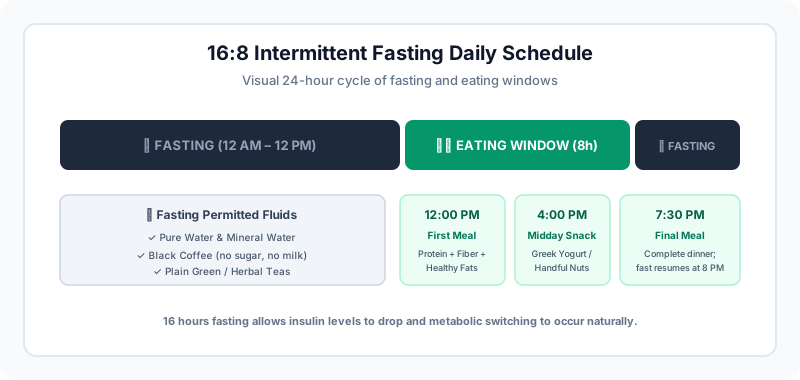
16 hours fasting + 8 hours eating
during each 24-hour period.
A large portion of the fasting period happens while you sleep.
For example:
Time | Example |
10:00 a.m. | First meal |
2:00 p.m. | Lunch |
5:30 p.m. | Dinner |
6:00 p.m. | Eating window closes |
6:00 p.m.–10:00 a.m. | Fast |
10:00 a.m. | Next eating window begins |
You do not have to follow these exact hours.
The schedule should fit your:
- Sleep
- Work
- Exercise
- Family meals
- Hunger patterns
- Medical needs
Common 16:8 Fasting Schedules
Here are three simple examples.
Early Schedule
Eating: 8 a.m.–4 p.m.
Fasting: 4 p.m.–8 a.m.
This may work for someone who prefers breakfast and an early dinner.
Middle Schedule
Eating: 10 a.m.–6 p.m.
Fasting: 6 p.m.–10 a.m.
This can be a practical compromise for people who want breakfast later but still eat dinner relatively early.
Later Schedule
Eating: 12 p.m.–8 p.m.
Fasting: 8 p.m.–12 p.m.
This is popular because it allows lunch and dinner with family or friends.
However, there is no proven universal 8-hour window that everyone needs to follow.
A 2025 National Institute on Aging summary of a randomized trial in adults with obesity reported that different 8-hour eating windows produced broadly similar weight-related outcomes, suggesting that the exact timing may be less important than previously assumed.
Another NIH-supported trial in adults with metabolic syndrome used individualized 8-to-10-hour eating periods that began at least one hour after waking and ended at least three hours before sleep.
Do Beginners Have to Start With 16 Hours?
No.
You do not have to jump directly into a 16-hour fast.
If you are a generally healthy adult and want to experiment with time-restricted eating, a gradual approach may feel easier.
For example:
Stage 1: 12:12
Eat within a 12-hour window.
Example:
7 a.m.–7 p.m.
Stage 2: 14:10
Eat within a 10-hour window.
Example:
8 a.m.–6 p.m.
Stage 3: 16:8
If the shorter eating window still feels comfortable and fits your health needs, you could move to an 8-hour eating window.
There is no prize for fasting longer.
A schedule that feels manageable is more useful than one that makes you tired, dizzy, irritable, or obsessed with food.
What Can You Have During the Fasting Period?
A fasting period generally means avoiding foods and drinks that provide meaningful calories.

Water is the simplest choice.
Many people also use:
- Plain unsweetened tea
- Black coffee
However, individual tolerance to caffeine varies, and certain medications or medical conditions may change what is appropriate.
Drinks containing meaningful calories, such as:
- Sugary coffee
- Soft drinks
- Juice
- Milkshakes
- Sweetened tea
would generally end a calorie-free fasting period.
Do not use fasting as a reason to avoid adequate hydration.
And avoid dry fasting, which intentionally restricts both food and fluids. Mayo Clinic warns that dry fasting can lead to dehydration and serious health concerns.
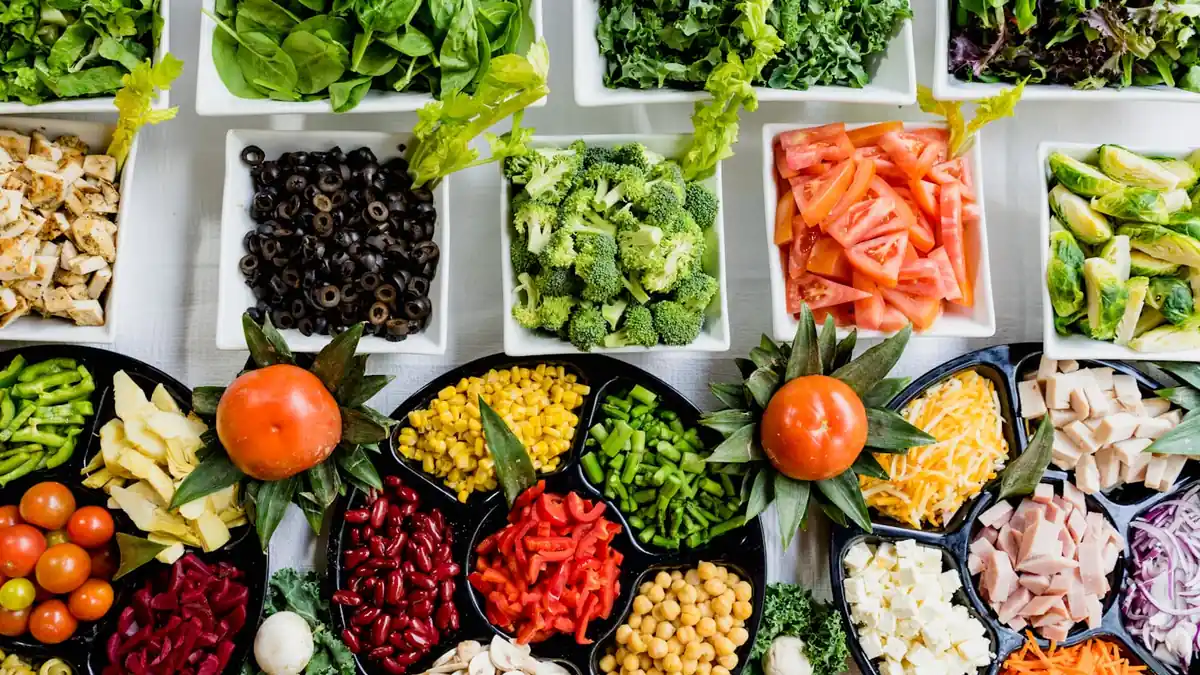
What Should You Eat During a 16:8 Eating Window?
Intermittent fasting does not make food quality irrelevant.
An 8-hour eating window filled mainly with sweets, fried food, sugary drinks, and highly processed snacks is not automatically healthy.
Build meals around:
- Protein
- Vegetables
- Whole fruit
- Whole grains
- Beans and lentils
- Healthy fats
- Minimally processed foods
The goal is to obtain adequate nutrition even though your eating period is shorter.
Best Protein Foods for Intermittent Fasting
Useful protein sources include:
- Eggs
- Greek yogurt
- Cottage cheese
- Fish
- Chicken
- Turkey
- Beans
- Lentils
- Tofu
- Tempeh
- Edamame
Protein can help make meals more satisfying and contributes to maintaining body tissues, including muscle.
If you are eating fewer meals, make sure those meals still contain meaningful nutrition rather than simply becoming smaller opportunities to eat snack food.
Best High-Fiber Foods
Fiber-rich foods can help make meals more filling.
Examples include:
- Oats
- Beans
- Lentils
- Chickpeas
- Whole grains
- Berries
- Apples
- Pears
- Vegetables
- Chia seeds
- Nuts
A simple meal might combine:
Chicken + brown rice + vegetables
or:
Lentils + quinoa + vegetables
or:
Greek yogurt + oats + berries + chia seeds
Healthy Fat Sources
Foods rich in unsaturated fats can also fit into your meals.
Examples include:
- Olive oil
- Nuts
- Seeds
- Avocado
- Fatty fish
These foods are nutritious, but they are also relatively calorie-dense.
If weight loss is your goal, portions still matter.
Foods to Limit During Intermittent Fasting
There is no universal forbidden-food list.
However, regularly filling your eating window with highly processed foods can make it harder to obtain enough fiber, protein, vitamins, and minerals.
Limit frequent large amounts of:
- Sugary drinks
- Candy
- Pastries
- Deep-fried foods
- Processed snacks
- Large desserts
- Highly refined foods
- Excessive alcohol
You do not need a perfect diet.
Your overall pattern matters more than one meal.
Example 16:8 Intermittent Fasting Meal Plan
Here is a simple example using a 10 a.m.–6 p.m. eating window.
Portions should be adjusted for your individual calorie and nutritional needs.
10:00 a.m. First Meal
Egg and oatmeal breakfast
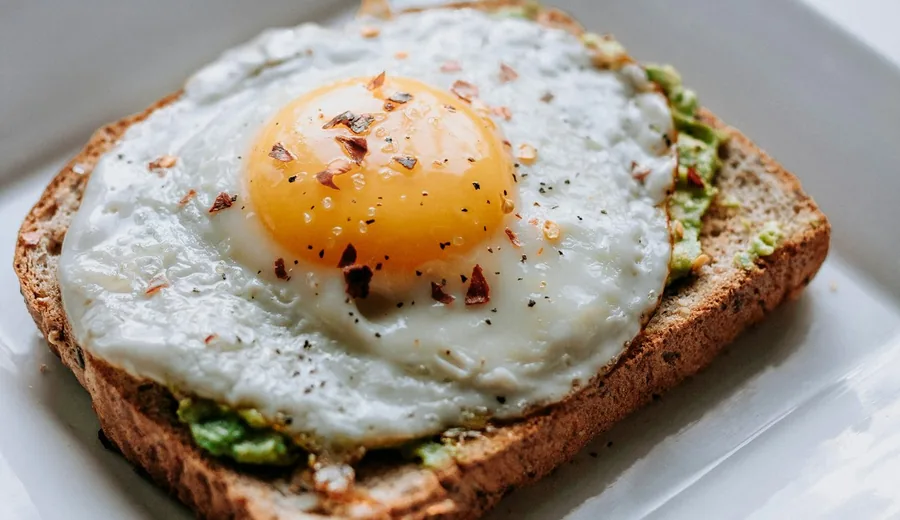
- Eggs with spinach and tomatoes
- Oatmeal
- Berries
- Plain Greek yogurt
This meal combines protein, fiber-rich carbohydrates, fruit, and vegetables.
2:00 p.m. Lunch
Chicken grain bowl
Combine:
- Grilled chicken
- Brown rice or quinoa
- Chickpeas
- Mixed vegetables
- Olive oil and lemon dressing
5:30 p.m. Dinner
Salmon and vegetables

Serve:
- Salmon
- Potato
- Broccoli
- Side salad
Finish eating around 6 p.m.
Then begin the fasting period.
Vegetarian 16:8 Meal Example
First Meal
Greek yogurt, oats, berries, walnuts, and chia seeds.
Lunch
Lentil and quinoa bowl with vegetables.
Dinner
Tofu stir-fry with brown rice and mixed vegetables.
Vegan 16:8 Meal Example
First Meal
Oatmeal made with fortified soy milk, berries, chia seeds, and nuts.
Lunch
Chickpea and quinoa bowl with vegetables.
Dinner
Tofu or tempeh with brown rice and broccoli.
A shorter eating window can make meeting nutritional requirements more difficult for some people, so food quality and variety become especially important.
Can Intermittent Fasting Help With Weight Loss?
It can help some people lose weight.
But the reason is not necessarily that fasting unlocks a unique fat-burning effect.
Restricting eating to a shorter period may naturally reduce:
- Late-night eating
- Snacking
- Sugary drinks
- Extra meals
- Total calorie intake
If this causes you to consume fewer calories than your body uses, weight loss can occur.
In a 2024 NIH-reported trial involving adults with metabolic syndrome and prediabetes, participants following an 8-to-10-hour eating window experienced modest reductions in body weight, BMI, and trunk fat over three months. Researchers emphasized that larger and longer studies are still needed.
Other trials show an important limitation.
A randomized 2024 study that kept calorie intake similar between groups found that time-restricted eating did not produce a clear additional weight-loss benefit simply from meal timing.
That means total calorie intake still matters.
Does 16:8 Fasting Burn More Fat?
During fasting, your body's immediate fuel use changes as time passes since your last meal.
But this does not mean fasting automatically causes greater long-term body-fat loss regardless of how much you eat.
If you overeat during the eating window, you may not create an energy deficit.
For weight loss, your overall energy balance across days and weeks remains important.
Think of intermittent fasting as a meal-timing strategy, not a loophole that makes calories irrelevant.
Potential Benefits of Intermittent Fasting
Research is still evolving.
Possible benefits observed in some studies include the following.
1. Weight Loss
Time-restricted eating can help some people lose weight, particularly when the shorter eating window reduces total calorie intake.
However, results vary between studies and individuals.
2. Blood Sugar Control
Some clinical trials have reported modest improvements in measures of glucose control.
For example, the NIH-supported metabolic syndrome trial found a modest improvement in HbA1c after three months of time-restricted eating.
This does not mean people with diabetes should begin fasting without medical guidance.
Diabetes medications can make fasting significantly more complicated because of the risk of low or high blood sugar.
3. Simpler Meal Structure
Some people find it easier to follow a time-based rule than to count calories at every meal.
For example:
“I finish dinner by 7 p.m.”
may feel simpler than continuously tracking every calorie.
Other people find fasting much harder.
Lifestyle fit matters.
4. Possible Improvements in Some Cardiometabolic Markers
Short-term research has reported improvements in factors such as:
- Body weight
- Blood glucose
- Blood pressure
- Blood lipids
in some populations.
However, Mayo Clinic notes that studies have produced mixed results and that calorie restriction alone may provide similar benefits in some cases. Long-term effects remain uncertain.
What Intermittent Fasting Cannot Guarantee
Intermittent fasting does not guarantee:
- Weight loss
- Belly-fat loss
- Diabetes prevention
- Longer life
- Better cholesterol
- Improved metabolism
- Better health for everyone
Research findings from specific groups should not be treated as proof that every healthy person will experience the same results.
The National Institute on Aging has emphasized that researchers still have much to learn about the long-term safety and effectiveness of fasting diets in humans.
Is Intermittent Fasting Better Than a Normal Calorie Deficit?
Not necessarily.
For some people, it may be easier.
For others, an ordinary eating pattern with appropriate portions may work better.
A 2025 randomized trial comparing time-restricted eating, calorie restriction, and unrestricted eating found no statistically significant differences in body-weight change between the time-restricted and unrestricted groups over 12 weeks.
This is one reason it is better to view fasting as one possible strategy, not the superior diet for everyone.
Possible Side Effects of Intermittent Fasting
Some people experience:
- Hunger
- Fatigue
- Headaches
- Dizziness
- Irritability
- Difficulty concentrating
- Constipation
- Mood changes
Mayo Clinic also notes that intermittent fasting may affect the menstrual cycle in some people.
Mild hunger while adjusting to a new meal schedule is different from feeling persistently unwell.
Do not assume severe symptoms are simply something you must “push through.”
Who Should Be Especially Careful With Intermittent Fasting?
Intermittent fasting is not appropriate for everyone.
Medical guidance is especially important if you:
- Have diabetes
- Take medications that can affect blood sugar
- Have a history of hypoglycemia
- Have significant kidney disease
- Have significant liver disease
- Are pregnant
- Are breastfeeding
- Have an eating disorder or history of disordered eating
- Are under 18
- Have other medical conditions affected by meal timing
Mayo Clinic specifically identifies pregnancy, breastfeeding, eating disorders, diabetes medications, and a history of hypoglycemia among situations where fasting may be inappropriate or require medical supervision.
Intermittent Fasting and Diabetes
People with diabetes should not casually begin intermittent fasting.
Fasting can interact with:
- Insulin
- Diabetes medications
- Meal timing
- Exercise
- Blood glucose levels
Certain treatments can increase the risk of hypoglycemia when meals are skipped or delayed.
NIH research suggests time-restricted eating may be feasible for some adults with type 2 diabetes under appropriate conditions, but that does not mean it is safe to self-manage without medication review or professional advice.
If you take medication for diabetes, discuss fasting with your healthcare team before changing your eating schedule.
Intermittent Fasting During Pregnancy or Breastfeeding
Intermittent fasting is generally not recommended as a self-directed weight-loss strategy during pregnancy or breastfeeding.
These periods have additional energy and nutrient requirements.
Mayo Clinic specifically lists pregnancy and breastfeeding among situations in which intermittent fasting may not be a healthy eating pattern.
Intermittent Fasting and Eating Disorders
Fasting rules can be problematic for someone with an eating disorder or a history of disordered eating.
A rigid schedule may reinforce restrictive eating behaviors or trigger unhealthy patterns in some individuals.
Mayo Clinic lists eating disorders among conditions for which intermittent fasting may not be appropriate.
If this applies to you, seek individualized advice rather than experimenting with restrictive fasting schedules.
Can You Exercise While Intermittent Fasting?
Many healthy people can exercise while using a time-restricted eating schedule.
But the best timing is individual.
You might prefer training:
- Shortly before your first meal
- During your eating window
- After a meal
Pay attention to:
- Energy
- Performance
- Hydration
- Recovery
- Hunger
Highly active people and athletes may find a short eating window makes it harder to consume enough energy and nutrients for training and recovery. Mayo Clinic specifically notes that athletes can have difficulty fueling and refueling appropriately with fasting.
Do You Need to Skip Breakfast?
No.
Intermittent fasting does not require skipping breakfast.
You could eat:
8 a.m.–4 p.m.
and fast during the evening.
Or:
10 a.m.–6 p.m.
The best schedule is the one that fits your daily routine and health needs.
Do not force yourself to skip a meal you enjoy simply because a social-media fasting schedule says you must.
Can You Drink Coffee During Intermittent Fasting?
Plain black coffee contains very few calories and is commonly used during time-restricted eating.
However, coffee with:
- Sugar
- Cream
- Milk
- Syrup
- Sweetened creamer
adds calories.
Caffeine can also cause:
- Jitters
- Digestive discomfort
- Sleep disruption
- Increased heart rate
in some people.
Water remains the simplest fasting beverage.
Can You Drink Tea?
Plain unsweetened tea is another common option.
Avoid turning it into a high-calorie drink with large amounts of sugar, honey, milk, or cream if your goal is a calorie-free fasting period.
Can You Take Supplements During a Fast?
It depends on the supplement.
Some supplements:
- Contain calories
- Are better absorbed with food
- Cause nausea on an empty stomach
- Can interact with medications
Do not change the timing of prescribed medications simply to protect a fasting window.
Medication safety is more important than maintaining a fasting schedule.
Ask a healthcare professional or pharmacist when necessary.
Common Intermittent Fasting Mistakes
1. Eating Anything You Want During the Eating Window
An 8-hour window does not make food quality irrelevant.
You still need protein, fiber, vitamins, minerals, and adequate energy.
2. Overeating Because You Are Extremely Hungry
If fasting causes you to compensate with very large meals, the approach may not help with calorie control.
3. Starting With an Extreme Fast
You do not need to begin with 18, 20, or 24 hours.
Longer fasting is not automatically healthier.
4. Ignoring Hydration
Drink enough fluids.
Do not use dry fasting as a weight-loss strategy.
5. Ignoring Protein
If you eat fewer meals, make sure those meals still provide adequate protein.
6. Eating Too Little
A shorter eating window can accidentally turn into severe calorie restriction.
The goal is not starvation.
7. Breaking the Fast With a Huge Meal
You do not need to “reward” yourself after fasting.
Eat a normal balanced meal.
8. Thinking Fasting Cancels Out Poor Food Choices
Timing cannot replace diet quality.
9. Ignoring Sleep
A fasting schedule that regularly forces you to eat very late or interferes with sleep may not suit you.
10. Following a Schedule That Does Not Fit Your Life
If fasting makes work, exercise, family meals, or social life unnecessarily difficult, another eating strategy may be more sustainable.
A Simple Beginner 16:8 Plan
If you are a healthy adult for whom fasting is appropriate, a simple day might look like this:
Morning
- Water
- Plain tea or coffee if desired and tolerated
10:00 a.m.
First balanced meal.
2:00 p.m.
Second meal.
5:30 p.m.
Dinner.
6:00 p.m.
Finish calorie-containing foods and drinks.
Evening
Water and non-caloric beverages as appropriate.
Next Morning
Continue fasting until around 10 a.m.
The exact hours are flexible.
Consistency and nutritional adequacy matter more than copying someone else's clock.
How to Make 16:8 Fasting Easier
A few practical habits can help.
Finish Dinner at a Consistent Time
Much of your fast can happen overnight.
Build Satisfying Meals
Include:
Protein + fiber-rich foods + vegetables or fruit + healthy fats
Do Not Save All Your Calories for One Huge Meal
You can eat two or three balanced meals within your window.
Keep Water Available
Hydration may make the transition easier.
Protect Your Sleep
Do not sacrifice sleep simply to fit a fasting schedule.
Adjust When Necessary
Travel, illness, exercise, work, and social events can change your routine.
There is no reason to treat an eating window like an unbreakable rule.
Frequently Asked Questions
The Bottom Line
Intermittent fasting is a meal-timing strategy, not a magic weight-loss diet.
With the popular 16:8 method, you fast for approximately 16 hours and eat within an 8-hour window.
A simple schedule might be:
10 a.m.–6 p.m. eating
followed by:
6 p.m.–10 a.m. fasting.
During the eating window, prioritize balanced foods such as:
Protein, vegetables, whole fruit, whole grains, beans, lentils, nuts, seeds, and healthy fats.
Some clinical studies suggest time-restricted eating can produce modest improvements in weight and metabolic health for certain people, while other studies show little advantage over ordinary calorie restriction. Researchers are still studying its long-term benefits and risks.
The most important question is therefore not:
“Is intermittent fasting the best diet?”
It is:
“Is this a safe, nutritious, and sustainable eating pattern for me?”
If 16:8 helps you organize meals, eat nutritious food, control calorie intake, and maintain a healthy lifestyle, it may be a useful option.
If it makes you exhausted, excessively hungry, encourages overeating, interferes with training or social life, or conflicts with your medical needs, another eating pattern may suit you better.
And if you have diabetes, take medications affected by food intake, are pregnant or breastfeeding, have an eating disorder or history of disordered eating, or have another significant medical condition, discuss fasting with an appropriate healthcare professional before changing your meal schedule.